
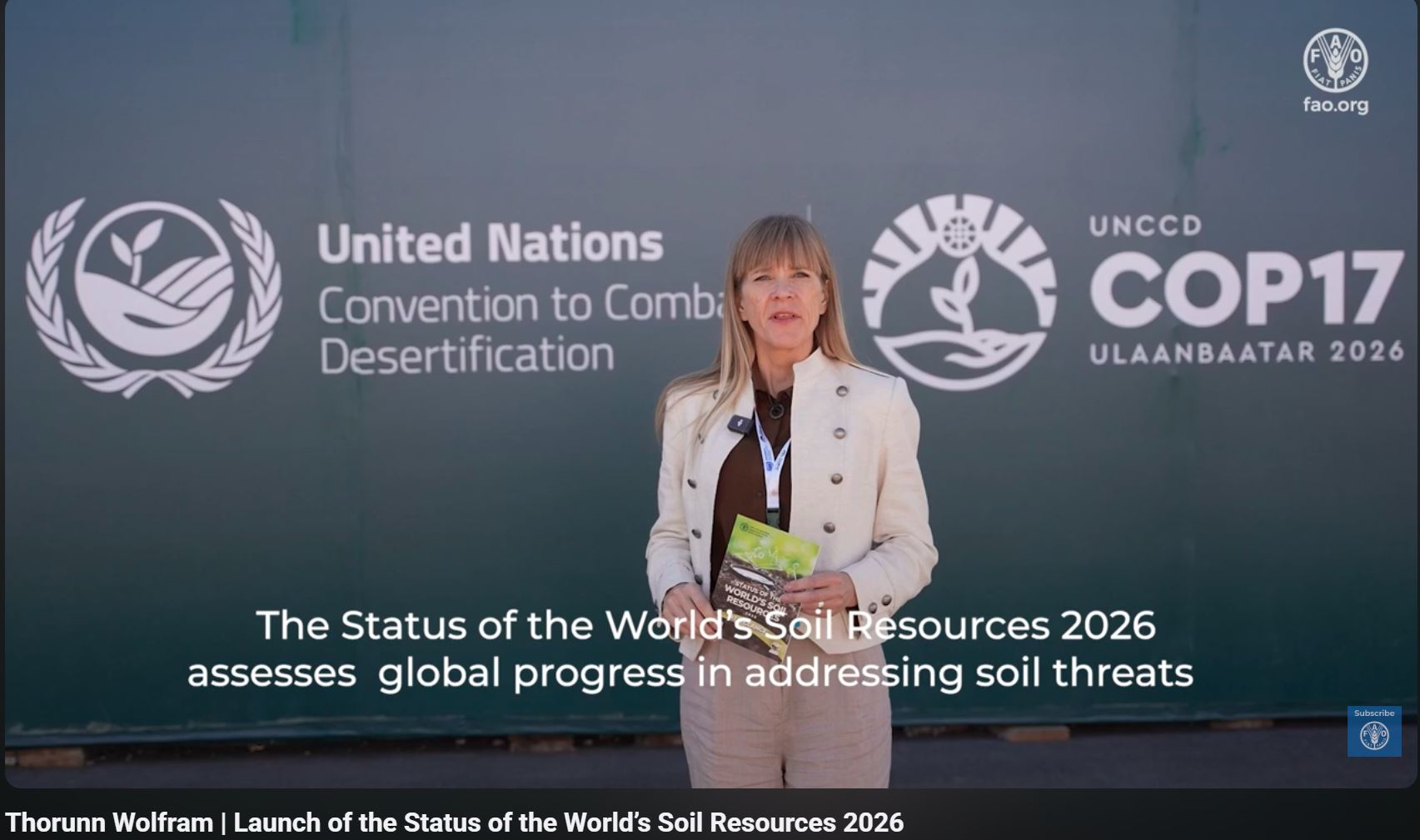

 The document provides an updated assessment of the status and trends in the adoption of sustainable soil management of the world’s soils, more than a decade after the first edition in 2015. The report shows that, while knowledge and solutions have advanced since then, 𝘀𝘂𝘀𝘁𝗮𝗶𝗻𝗮𝗯𝗹𝗲 𝘀𝗼𝗶𝗹 𝗺𝗮𝗻𝗮𝗴𝗲𝗺𝗲𝗻𝘁 𝗶𝘀 𝘀𝘁𝗶𝗹𝗹 𝗻𝗼𝘁 𝗯𝗲𝗶𝗻𝗴 𝗮𝗱𝗼𝗽𝘁𝗲𝗱 𝗮𝘁 𝘁𝗵𝗲 𝘀𝗰𝗮𝗹𝗲 𝗮𝗻𝗱 𝗽𝗮𝗰𝗲 𝗻𝗲𝗲𝗱𝗲𝗱.
 At the same time, it highlights proven practices and enabling conditions that can accelerate the adoption of sustainable soil management, offering a clear pathway towards healthier soils and more resilient agrifood systems. 𝗧𝗵𝗲 𝗮𝘀𝘀𝗲𝘀𝘀𝗺𝗲𝗻𝘁 𝗯𝗿𝗶𝗻𝗴𝘀 𝘁𝗼𝗴𝗲𝘁𝗵𝗲𝗿 𝘀𝗰𝗶𝗲𝗻𝘁𝗶𝗳𝗶𝗰 𝗲𝘃𝗶𝗱𝗲𝗻𝗰𝗲 𝗮𝗻𝗱 𝗿𝗲𝗴𝗶𝗼𝗻𝗮𝗹 𝗲𝘅𝗽𝗲𝗿𝘁𝗶𝘀𝗲 𝗳𝗿𝗼𝗺 𝗮𝗿𝗼𝘂𝗻𝗱 𝘁𝗵𝗲 𝘄𝗼𝗿𝗹𝗱, and draws on scientific literature published between 2015 and 2025. See the presentation video below.
 Report https://doi.org/10.4060/ce0792en
 Policy brief https://doi.org/10.4060/ce0846en
 Brochure https://openknowledge.fao.org/handle/20.500.14283/ce1012en
 It is also worth noting the publication of the Food and Agriculture Organization of the United Nations (FAO) and United Nations Convention to Combat Desertification report
🎥 Presentation video https://www.facebook.com/reel/1383577029956581
𝗟𝗶𝘃𝗶𝗻𝗴 𝘀𝗼𝗶𝗹𝘀, 𝗽𝗿𝗼𝗱𝘂𝗰𝘁𝗶𝘃𝗲 𝗹𝗮𝗻𝗱𝘀, 𝗿𝗲𝘀𝗶𝗹𝗶𝗲𝗻𝘁 𝗹𝗮𝗻𝗱𝘀𝗰𝗮𝗽𝗲𝘀
𝙂𝙪𝙞𝙙𝙖𝙣𝙘𝙚 𝙤𝙣 𝙖𝙫𝙤𝙞𝙙𝙞𝙣𝙜, 𝙧𝙚𝙙𝙪𝙘𝙞𝙣𝙜 𝙖𝙣𝙙 𝙧𝙚𝙫𝙚𝙧𝙨𝙞𝙣𝙜 𝙖𝙜𝙧𝙞𝙘𝙪𝙡𝙩𝙪𝙧𝙖𝙡 𝙡𝙖𝙣𝙙 𝙖𝙣𝙙 𝙨𝙤𝙞𝙡 𝙙𝙚𝙜𝙧𝙖𝙙𝙖𝙩𝙞𝙤𝙣
The guidance provides a framework for land degradation neutrality in agricultural landscapes through integrated land-use planning, sustainable land-use systems, resilient production systems, and an enabling environment. It promotes approaches that safeguard soil health, strengthen resilience, enhance food security and nutrition, and support biodiversity conservation and climate action, recognizing national and local contexts. Complemented by a digital companion hosted on the ATIO Knowledge Base, the guidance offers a practical, adaptable resource for policymakers, practitioners, investors, farmers, pastoralists, Indigenous Peoples and civil society organizations.
The document is accessible here:
Report https://doi.org/10.4060/ce1094en
Please follow us on our official Instagram channel too: